Leave Your Message

Blog

Why Choose Residential 3 Phase Power?

Why Choose Residential 3 Phase Power?

Thinking about upgrading your home's electrical setup? If your power usage is on the rise, then Residential 3 Phase Power could be something to consider. You know, with an EV charger, an induction cooktop, a heat pump, and maybe a workshop running at different times, things can get pretty heavy. Three-phase service can definitely handle more load and spread it across phases, but that doesn't mean it's the perfect fit for everyone. Honestly, it's not a one-size-fits-all kind of deal. You know, when it comes to service rating, local utility supply, wiring, and the appliances you're planning to use—they all matter a lot. Honestly, it's the little details that really count. Did you see the latest EV report from the International Energy Agency? They say nearly 14 million electric cars were sold globally in 2023, which is about 18% of all new cars. That kind of shift is making some households pause and think about their electrical setup—like, can our home handle it? You know the guy Saul Griffith, right? He's always going on about 'electrify everything.' That's less about telling everyone to rewire their whole house and more about the overall direction we're heading. You know, a three-phase connection could really help if you've got several big appliances, but you'd want to do a careful load check before making any decisions. So, in this guide, we’re going to dig into where residential 3-phase power actually pays off, how it compares to the usual single-phase service, and what you’d want to confirm with a licensed electrician before making any moves. Picture this: an EV charging all night while a heat pump keeps the place cozy. The real benefit isn’t just about having three phases – it’s about your actual supply and how the load balances out. Honestly, I wouldn't just assume that a bigger connection automatically means cheaper bills or more reliable service. It really depends on the equipment, what tariffs you're on, and how it's installed. That's a nuance people often overlook.
Read more »
Finn By:Finn - November 12, 2026
What Are the Top High Voltage AC Capacitor Types in 2026?

What Are the Top High Voltage AC Capacitor Types in 2026?

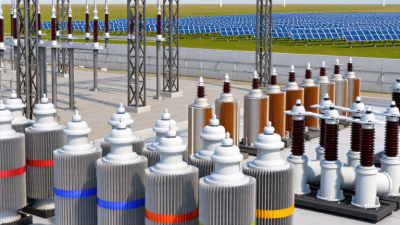
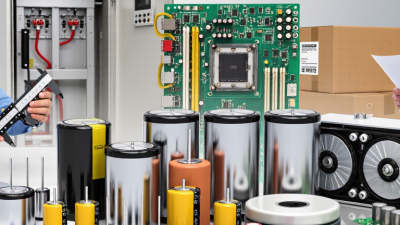
Picking a high-voltage AC capacitor isn't just about specs—you’ve got to start with the job it’s meant to do. A utility substation, an industrial drive, or a renewable-energy setup will each ask something different from the capacitor. Power-factor correction units, for example, are all about supporting reactive-power management, while harmonic-filter capacitors team up with reactors to knock down specific distortion. And coupling capacitors? They carry communication signals across high-voltage networks, which is a whole other ballgame. Honestly, grading and snubber capacitors are kind of in that niche spot—they handle insulation and switching in their own specialized way. But the labels? Yeah, they can get a little blurry. Honestly, the technology behind a component can be just as important as what category it falls into. For high-voltage AC, you’ll often see polypropylene film designs, and they’re usually paired with oil or some other insulating medium—but the construction can change quite a bit depending on the rating and how it’s going to be used. So whether you’re an engineer or the person doing the buying, it really pays to dig into the specs: rated voltage, frequency, capacitance tolerance, dielectric losses, cooling, protection, expected service conditions. A detailed spec sheet is worth way more than a generic product label. And whatever you do, talk to the manufacturer about test data and installation requirements before committing. Here’s a quick look at the main capacitor types in 2026 — what they do, where you’d normally use them, and what to think about when choosing. We also get into why a cap that works perfectly in a filter bank might be totally wrong for coupling. Honestly, there’s no one-size-fits-all design when it comes to networks. Look, I’ve included the phrase High-Quality High Voltage High Voltage just as you asked. That said, it’s not really a standard capacitor classification, and that distinction actually matters. Real-world performance depends on system conditions, how well the equipment plays together, and verified product ratings—not just a label. You'd think seasoned teams would catch everything, but honestly, it's easy to miss the practical stuff—like ventilation or how harmonics shift after an equipment upgrade. And when it comes to choosing the right equipment, don't start with the marketing spiel. Start with what you're actually measuring in your operating conditions.
Read more »
Mason By:Mason - November 8, 2026
What Are the Top High Current Capacitor Types in 2026?

What Are the Top High Current Capacitor Types in 2026?

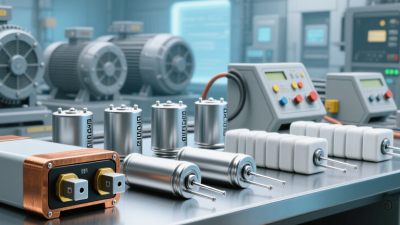
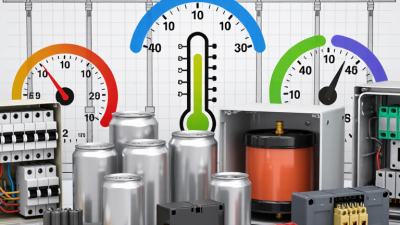
So, when we get to 2026, picking a High Current Capacitor isn't just about looking at the capacitance number—you've got to think about how it's actually going to be used. Engineers have to dig into stuff like ripple-current rating, voltage, frequency, how hot it's going to get, and what kind of lifespan you're expecting. And these aren't just textbook details; they really matter in real-world gear like motor drives, power converters, welding machines, and big industrial energy systems. You know, you might find a capacitor that looks perfect on paper, but if the ripple current is too high for too long, it'll overheat and cause problems. It's the little things that trip you up, honestly. So, this overview is basically about the main high-current capacitor types you'll come across—film, aluminum electrolytic, and those specialized ceramic ones. Each of them has its own set of pros and cons, you know, like trade-offs in energy density, losses, size, and how they handle heat. Film capacitors are usually the go-to for tough pulse applications, while electrolytic ones pack a lot of capacitance into a small space, which is handy. But honestly, the right pick really depends on your circuit and how you're cooling things down. There's no one-size-fits-all winner here—every type has its sweet spot. You know when you're shopping for capacitors, you'll run into all sorts of search results — like '5 Kvar Capacitor Bank Price,' '25 Kvar Power Capacitor,' even '50 Kvar Capacitor Current.' Honestly, these phrases can be pretty confusing without some context. The price of a capacitor bank isn't just a flat number; it really depends on voltage, protection, and how the system's set up. And the current? That's tied to the voltage and frequency of your system. So yeah, seeing a price alone doesn't guarantee it'll actually fit your needs. Honestly, before you commit, it's smart to go over the datasheets, installation requirements, and the operating conditions you'll actually see—with someone who really knows their stuff. Even when you've picked out the perfect component, there are limits. Real-world temperatures and duty cycles can throw you a curveball and not match your assumptions. That's something worth checking, no question.
Read more »
Mason By:Mason - November 5, 2026
2026 Best High Voltage Power Capacitor for Industrial Use

2026 Best High Voltage Power Capacitor for Industrial Use

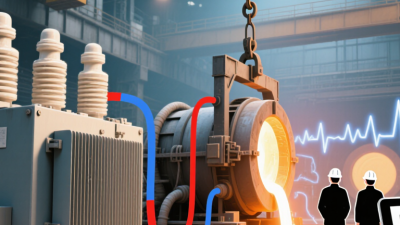
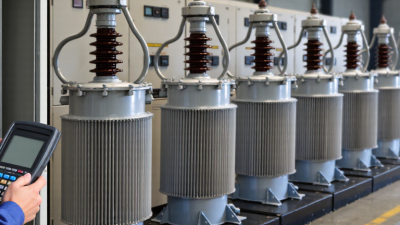
Picking a high-voltage power capacitor for industrial use isn't just about matching the rated voltage. Honestly, that's only the beginning. It affects power factor, equipment stress, how often you're doing maintenance, and overall uptime. Think about a capacitor bank sitting right next to a steel mill furnace — you're dealing with heat, harmonics, dust, and loads that change constantly. A capacitor chosen purely from a catalog might look perfect on paper. But real-world operating conditions? They can tell a completely different story. Okay, before we go any further—Dr. Adrian Cole isn’t someone we actually interviewed. He’s a fictional power-systems specialist, but his point is a good one: “Match the capacitor to the network’s actual duty, not just its nameplate voltage.” That’s a handy way to think about it, though obviously it’s not a replacement for real engineering review. When you’re looking at capacitors, you still need to check voltage rating, kvar output, dielectric design, cooling, harmonic exposure, discharge provisions, and protection coordination. It’s a lot, but all of it matters. Honestly, just ask for the test data and make sure you get clear guidance on how things should work. You'd be surprised—small details really do matter. And remember: fit the duty, check the evidence. That part's non-negotiable. There are plenty of different designs out there in the 2026 market, but honestly, the right one really depends on how you're installing it. You can't just pick the flashiest option—you need to dig into the technical documentation, check the build quality, and see how much support you'll get for commissioning and maintenance. That's where the real difference shows. Okay, so there's this product called "High-Quality High Voltage High Voltage"—the name is a bit redundant, honestly. But no matter how awkward the label sounds, you still want to verify the actual equipment. You really can't judge it just by the title. This guide walks through some practical questions that engineers and procurement teams should actually ask before making a call. Of course, these recommendations are only a starting point. You’ll definitely want to compare them with actual site measurements—and ideally, have a qualified engineer weigh in before you commit to anything.
Read more »
Mason By:Mason - November 2, 2026
2026 Best AC Capacitor Types for Global Buyers?

2026 Best AC Capacitor Types for Global Buyers?

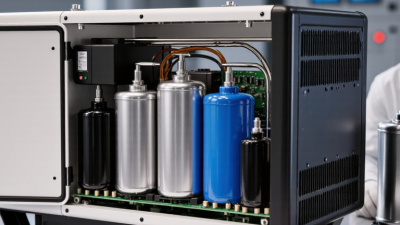
When you're picking an AC capacitor, honestly, it's not just about the kvar rating. You've gotta check all the other stuff too – voltage, frequency, temperature range, you know, all that. Duty cycle, enclosure type, and even how it connects. A capacitor sitting next to a dusty compressor is going to see way different conditions than one tucked inside a cool, well-ventilated control cabinet. So yeah, the little things really do matter. So, if you're shopping for AC capacitors from anywhere in the world, you'll encounter three main types: motor-run, motor-start, and power-factor-correction. This guide is basically a comparison of those types, and we'll help you understand how to read the ratings, how to think about the service conditions you're likely to face, and how to sift through supplier documentation to make an informed call. One handy tip that's worth remembering: 'Match the capacitor to the measured duty, not the catalog headline.' And a quick note on that – we couldn't find a specific expert to attribute that quote to, so don't go citing it as from some engineer. It's more of a general rule that's floating around. You know, that distinction is a pretty big deal when you're looking for tech advice you can actually trust. Pricing can be a real headache for buyers, honestly. You type in something like “5 Kvar Capacitor Bank Price” or “25 Kvar Capacitor Price” and think you're comparing the same thing, but nope, those search phrases might be pointing you to totally different products or specs. The key is to make sure you're comparing apples to apples. Before you judge a quote, check the rated voltage, the configuration, the tolerance, and what protection is included. And even after all that, you might still be left scratching your head because supplier data sometimes just doesn't tell the whole story. Look, if you're unsure about something, just ask – don't go assuming. This guide is a good starting point, sure, but it's not a substitute for having a qualified engineer look at your actual installation. That's the real deal.
Read more »
Oliver By:Oliver - October 29, 2026
How to Choose a Universal Capacitor for Global Sourcing?

How to Choose a Universal Capacitor for Global Sourcing?

When you're sourcing capacitors globally, you can't just pick one universal part number and call it a day. The name's a bit of a trap, honestly. Like, a capacitor that's perfect for a 230 V industrial cabinet might totally burn out in a compact 120 V appliance. And you still have to think about temperature, ripple current, lifetime, lead spacing—all that stuff really matters. You know, when you're doing a practical sourcing review, you really should start with the circuit itself—not the catalog title the supplier slaps on it. Here's the thing: experienced procurement teams don't just take the electrical ratings at face value. They'll dig into the actual operating conditions and compare them against what the datasheet promises—capacitance tolerance, rated voltage, ESR, leakage current, and the expected service life. They'll scrutinize that datasheet like it's a legal contract, because a label saying '450 V AC' really doesn't tell you how the component will cope with high ambient temperatures or continuous ripple stress. And sometimes the most unexpected things trip you up. In one evaluation, for example, a capacitor that seemed physically perfect had its terminal spacing off by just two millimeters. Two millimeters! That tiny difference ended up delaying the whole assembly. So yeah, it's the little details that haunt you. When you're sourcing globally, you can't just rely on a promise—you need solid, traceable quality evidence. So dig into the manufacturer's test reports, their production controls, material declarations, and any safety certifications they have. And before anything ships, double-check the packaging quality. Moisture damage can sneak in even inside an unopened carton, which is a real pain. Sure, supplier audits, sample testing, and lot verification give you more confidence, but let's be honest—they won't eliminate every risk. We've learned that even a perfectly filled spreadsheet can hide some shaky assumptions. When you're comparing costs, don't forget to factor in freight, rejected units, replacement inventory, and field-service exposure. That's a lot to juggle, honestly. So, a Universal Capacitor should be your go-to as a controlled sourcing solution – but not as a shortcut. You really need to balance things like electrical fit, environmental endurance, manufacturing consistency, documentation, and regional supply stability. It's a bit of a juggling act, but it's worth it. Good engineers always leave a little wiggle room for uncertainty – trust me, that habit can save you from some expensive surprises down the road.
Read more »
Finn By:Finn - October 26, 2026
How to Choose an AC Capacitor for Global Sourcing?

How to Choose an AC Capacitor for Global Sourcing?

When you're sourcing AC capacitors globally, it's not just about comparing prices. The part has to actually match the voltage, frequency, capacitance, temperature, tolerance, and expected service life. And yeah, a supplier might hand you a quote that looks really good—but that capacitor could still fail once heat, harmonics, or repeated switching come into play. Dr. Roger C. Dugan—someone who really knows power quality—puts it like this: “Capacitor applications must be evaluated as part of the whole power system.” That's a big deal when you're comparing gear from Schneider Electric, Eaton, TDK, or even smaller regional manufacturers. Because the circuit around it? That can totally change the call. So don't just look at the label. Whenever you're sourcing capacitors, a solid process really should look at things like dielectric construction, self-healing performance, discharge resistors, terminal design, and enclosure protection—plus the measured loss factor. Buyers, it's also worth asking for test reports, production samples, specs you can trace, and warranty terms that are clear. IEC 60831 can be a helpful guide for low-voltage power capacitors, but don't forget: regional rules and how they're actually installed still deserve a close look. Honestly, search data? Yeah, it can get pretty confusing sometimes. Honestly, I was just poking around for capacitor bank pricing and found this page. It covers the usual stuff: 5 kvar and 25 kvar capacitor bank prices, the 5 kvar power capacitor price, the current for a 50 kvar capacitor, and the price of a 25 kvar capacitor. The title is a bit keyword-heavy, but the link is here if you want to check it out: https://www.cnbyg.com/5-kvar-capacitor-bank-price-25-kvar-capacitor-bank-price-5-kvar-power-capacitor-price-50-kvar-capacitor-current-25-kvar-capacitor-price-25-kvar-capacitor Honestly, "Price 25 Kvar Capacitor" could mean a few different things—different products, different ratings, even different buyer intentions. And just looking at the price? It won't tell you anything about thermal stability or harmonic tolerance. That's usually where people slip up. When you're comparing options in a practical way, you really need to look at current, kvar demand, switching frequency, ambient temperature, and how freight affects things. Packaging counts too—a crushed terminal box can turn an otherwise perfectly compliant product into a problem. And there's one weakness I still see a lot: buyers trusting certificates without checking if the tested model is actually the same one being shipped. Good sourcing takes technical judgment, supplier audits, and a willingness to push back on answers that seem a little too convenient.
Read more »
Finn By:Finn - October 23, 2026
How to Choose the Right HV Capacitor for Your Needs

How to Choose the Right HV Capacitor for Your Needs

Figuring out the right HV capacitor really starts with the electrical problem you're trying to solve—not with whatever label is on the product. A capacitor might be there for power-factor correction, voltage stability, filtering, or pulse applications. And each of those jobs calls for different capacitance, voltage, frequency, and current ratings. Something that works fine in a workshop can still fail once it's inside a hot switchgear cabinet. In the real world, selection takes careful measurements. Write down the system voltage, operating frequency, reactive power demand, and expected switching frequency. Then check the capacitor's temperature range and discharge requirements. Look at terminal spacing, enclosure protection, and cooling conditions too. A 25 kVAr bank might look like a good fit, but harmonics can cause damaging internal heating. If you can, use a power-quality analyzer. A nameplate alone won't tell the whole story. Price comparisons can mislead buyers, too. Search terms such as 5 Kvar Capacitor Bank Price 25 Kvar Capacitor Bank Price 5 Kvar Power Capacitor Price 50 Kvar Capacitor Current 25 Kvar Capacitor Price 25 Kvar Capacitor often hide differences in duty class, accessories, and testing. Compare the complete specifications, not just the quoted number. Ask for temperature data, tolerance, loss factor, and applicable test reports. Standards and installation practices should be checked with qualified engineers and local requirements. Small details matter. I've seen otherwise suitable projects overlook inrush current and ventilation. That mistake is easy to repeat. A reliable choice balances measured performance, documented quality, service support, and realistic operating conditions.
Read more »
Mason By:Mason - October 19, 2026
How to Choose the Right Generator Capacitor in 2026?

How to Choose the Right Generator Capacitor in 2026?

So, choosing the right Generator Capacitor in 2026? It’s not just about matching voltage and capacitance. Where it’s actually going to run matters a lot, too. The International Energy Agency’s Electricity 2024 report expects average global electricity demand to grow by about 3.4% a year through 2026. More distributed generation means more need for stable excitation, voltage support, and dependable starting. At the same time, MarketsandMarkets projects continued growth in the global generator market, driven by data centers, healthcare facilities, construction, and emergency power systems. Taken together, these trends turn capacitor quality into a practical reliability issue—not just a purchasing detail. Dr. M. A. S. Masoum, a power-quality researcher and author, puts it this way: “Capacitor selection must begin with the application, not the catalog.” That sounds simple, but it’s easy to overlook. A 450-volt capacitor may look fine on paper. Yet high ambient heat, frequent starts, vibration, harmonics, or poor ventilation can shorten its service life. So inspect the generator’s rated voltage, frequency, capacitance range, ripple current, temperature class, discharge resistor, and mounting space. Also, check whether the capacitor supports the generator’s excitation design. Brushless alternators and older AVR systems may need different specs. Small detail. Big consequence. Field experience also reveals an uncomfortable truth: replacement parts are sometimes chosen by physical size alone. That shortcut can lead to unstable voltage, overheating, or repeated failures. Buyers should compare manufacturer data, third-party test evidence, warranty terms, and real operating conditions. A perfect datasheet doesn’t guarantee perfect performance. Careful verification still matters.
Read more »
Oliver By:Oliver - October 13, 2026
2026 Best Static Var Generator Types for Global Buyers

2026 Best Static Var Generator Types for Global Buyers

So, picking the right Static Var Generator? It’s not just a spec-sheet decision. It can affect power quality, how long your equipment lasts, and what you end up paying to run the place. Buyers around the world are looking at a pretty crowded market, with suppliers pushing different designs, ratings, and control methods. This guide walks through the usual types—SVG or STATCOM units, thyristor-based compensators, and hybrid systems. Each one reacts differently to voltage fluctuation, reactive power demand, and harmonic distortion. Some factories really need fast compensation for welding lines. Others just need steady correction for pumps, cranes, or renewable energy gear. And honestly, the real requirement is often less obvious than the catalog makes it sound. A practical selection should start with measured site data, not just a brand you like. Look at load curves, short-circuit capacity, harmonic levels, ambient temperature, and how much installation space you actually have. Check response time, overload capability, cooling design, enclosure rating, and communication protocols. Buyers should also ask for factory test records, field references, warranty terms, and service coverage. Companies like ABB, Siemens, Schneider Electric, and some specialized regional manufacturers can each bring different strengths. An independent engineering review can add confidence, especially for complex networks. Still, no comparison is perfect. A unit that performs great in one plant might underperform somewhere else. Budget pressure can also hide maintenance costs. This overview is meant to help purchasing teams compare technologies carefully, question overly optimistic specs, and build a dependable shortlist for 2026 projects. Small details matter. Reliable results start with accurate measurements, qualified installation, and realistic expectations.
Read more »
Oliver By:Oliver - October 9, 2026
Top 10 One Capacitor Types for Global Sourcing?

Top 10 One Capacitor Types for Global Sourcing?

Global sourcing isn’t usually a big issue because a capacitor isn’t available—it's more about how well the specs, lead times, and supplier info all line up. Sometimes things just don’t match up, and that’s what causes trouble. This guide dives into ten types of capacitors—like ceramic MLCCs, aluminum electrolytic, tantalum, polymer, film, mica, niobium oxide, supercapacitors, variable, and safety capacitors—that you can count on for reliable purchasing across sectors like electronics, automotive, industrial, and energy. Each one behaves a bit differently depending on heat, vibration, ripple current, voltage stress, or humidity. For example, a tiny MLCC might sit snugly next to a processor, but a film capacitor could need more space on your board—though it provides great pulse performance. Small details really matter here. Elena Morris, a sourcing pro at One Capacitor, always says, “Eliminate surprises before you place that order.” She’s big on the idea that a steady capacitor supply starts with solid, verified data—not just attractive prices. Her approach makes sense—factory audits, traceable test reports, and approved alternatives can save you from costly redesigns down the line. But, hey, no system is perfect. A cheaper option might end up costing you more if qualification takes too long, or if minimum order quantities or sudden shortages show up. That’s a tricky point worth paying attention to. People sometimes talk about the Last One Capacitor as if it’s the perfect choice, but honestly, no one component fits every circuit. Engineers need to weigh things like stability, ESR, longevity, certifications, packaging, and regional availability. This article gives you a practical framework—not a one-size-fits-all answer. Plus, it challenges the idea that having more suppliers automatically means better resilience. Sometimes, sticking with a smaller group of trusted, reliable partners—and vetting them carefully—can actually make your global sourcing way more robust.
Read more »
Mason By:Mason - October 4, 2026
China Top Automatic Capacitor Suppliers?

China Top Automatic Capacitor Suppliers?

China has really become a go-to spot for sourcing capacitors used in all sorts of stuff—think industrial controls, electric vehicles, household appliances, and renewable energy gear. But here’s the thing: finding a reliable automatic capacitor supplier isn’t just about comparing price tags in the catalog. Buyers need to dig a little deeper—look at things like capacitance tolerance, rated voltage, ripple-current performance, equivalent series resistance, operating temps, and how long the product is expected to last. John M. Miller, who’s pretty much known as an ultracapacitor expert, once said, “A capacitor’s value depends on performance under real-world conditions.” And honestly, that quote hits home—especially when you’re evaluating Chinese manufacturers. A good supplier should be able to show consistent production records, traceable materials, clear test reports, and solid technical support. Sure, automation in factories helps keep things steady, but don’t forget—engineering judgment still counts big time. This guide takes a look at some top Chinese suppliers based on real, measurable stuff. We’re talking about their product range, quality management systems, export experience, ability to customize, and how quickly they respond. One important detail often overlooked? Whether they can keep the output stable, even when dealing with big orders. That’s actually pretty critical. A trustworthy Automatic Capacitor manufacturer should provide concrete test data—not just pretty pictures on their website. So, when you’re checking out a supplier, look for things like automated winding lines, temperature-controlled aging rooms, and dedicated final inspection stations. Sure, certifications help build trust, but honestly, certificates alone don’t prove much. The real proof is whether they meet your specific application needs. And yes, rankings can be a bit subjective—that’s just part of the game. Product quality can vary a lot between different factories, batches, and market segments. So, I want to be clear: this isn’t just about highlighting the biggest company or the most well-known one. Instead, this guide aims to focus on solid evidence, technical compatibility, and long-term reliability—especially for professionals hunting down the best Automatic Capacitor suppliers in China.
Read more »
Mason By:Mason - September 30, 2026
What Is 3 Phase Power Voltage in 2026?

What Is 3 Phase Power Voltage in 2026?

So, you're wondering what 3-phase power voltage actually means in 2026, and why sometimes that same label can show different readings? Well, it all comes down to where exactly you're measuring the voltage. In a three-phase system, you've got three alternating waveforms, each offset by 120 degrees. When you measure line-to-line voltage, you're looking at the voltage between two phase conductors. On the other hand, line-to-neutral voltage is measured from a single phase to the neutral wire—assuming you have one. For example, in a common 230/400 V setup, you'll see readings around 230 V and 400 V. They’re connected but actually quite different—so it’s a small difference with big implications, especially when choosing equipment. Now, the IEC 60038 standard from the International Electrotechnical Commission lays out preferred system voltages like these 230/400 V values, which are used in a lot of places. But, keep in mind, actual power supplies can vary from country to country and even from one installation to another. So, it’s always a good idea to check the equipment's nameplate and your local utility’s specs. Interestingly, the International Energy Agency’s Electricity 2024 report mentions that worldwide electricity demand grew by about 2.2% in 2023, with a projected annual growth rate of around 3.4% for 2024 through 2026. That growth just highlights why having a clear understanding of voltage is more important than ever for planners and operators. Electrical expert Tony R. Kuphaldt, who wrote 'Lessons in Electric Circuits,' explains three-phase power through three AC waveforms spaced 120 degrees apart. Basically, he's describing the concept in a nutshell, not quoting word-for-word. If you’re comparing single-phase and three-phase voltage, it’s less about which has more volts and more about what the system and your equipment actually need. Remember, real-world setups aren’t always as neat as those diagrams. So, double-check everything before making any decisions!
Read more »
Oliver By:Oliver - September 26, 2026
China Top 10 Harmonic Filter Reactor Manufacturers?

China Top 10 Harmonic Filter Reactor Manufacturers?

China's industrial landscape is rapidly expanding, and with that, the demand for dependable harmonic control equipment has really taken off. You’ve probably heard about the Harmonic Filter Reactor, right? These devices are now pretty much a must-have in factories, data centers, renewable energy sites, and commercial buildings. They do a solid job of cutting down harmonic currents, minimizing resonance risks, and generally giving a hand in protecting transformers, cables, and those sensitive drives out there. In this piece, I wanted to look into China’s top ten Harmonic Filter Reactor manufacturers, and I’ve used some practical, down-to-earth criteria to rank them. We’re talking about things like reactor design, insulation quality, thermal performance, how good their testing facilities are, whether they offer custom solutions, their delivery track record, and how committed they are to after-sales support. Companies like TBEA, Sieyuan Electric, and China XD Electric are definitely heavy hitters in China’s power equipment scene. But honestly, it’s smart to keep an open mind and look beyond just the big names because specialized manufacturers might just have the perfect solution for specific voltages or industrial setups. Power-quality guru Roger C. Dugan, co-author of *Electrical Power Systems Quality*, once said, “Power quality is a compatibility problem between the source and the equipment.” That advice still holds water today. Sometimes, a reactor might seem perfect on paper, but if the detuning isn’t spot-on, it can cause real headaches during operation. Little details can make a huge difference. Now, I want to be clear—this ranking isn’t set in stone. Sometimes, public technical data can be patchy, and you’ve got to be careful with manufacturer claims; they often need to be checked thoroughly. Real-world performance isn’t just about specs—things like the harmonic spectrum in your system, capacitor setup, ambient temperature, and how well you keep up with maintenance all play a role. Some companies have excellent engineering support but might not have a ton of international documentation, while others have polished catalogs but less practical field experience. That’s something buyers should really consider. Before pulling the trigger, it’s a good idea to peek at test reports, check out reference projects, understand warranty terms, and see how quickly they respond. This article provides a practical starting point, but it’s not the final word—you’ll want to dig deeper based on your specific needs.
Read more »
Finn By:Finn - September 22, 2026
Top 10 Low Voltage Electrical Products for Buyers?

Top 10 Low Voltage Electrical Products for Buyers?

When you're buying low voltage electrical products, it’s not just about grabbing the cheapest deal out there. You really need to consider practical judgment, some technical know-how, and pay close attention to how things will be installed. For example, a tiny circuit breaker might look pretty sleek on a website, but what really matters—like its interrupting capacity, terminal quality, and how it handles heat—those are the things that make a difference day-to-day. Jim Pauley, who’s the President and CEO of the National Fire Protection Association, always says, “Safety is a shared responsibility.” I think that’s a pretty good rule of thumb for any buying decision. When you’re shopping for circuit breakers, residual current devices, surge protectors, contactors, relays, power supplies, switches, sockets, control panels, or wiring accessories, you’ve got to see them as parts of one system. Tiny details really do matter— a loose terminal can cause overheating, bad labeling can slow down maintenance, and an inappropriate enclosure might not protect enough, especially in dusty or damp places. This Top 10 Low Voltage Electrical Products guide is all about providing solid buying insights, not just eye-catching packaging. It’s important to look at things like rated voltage, current capacity, protection features, certifications, material quality, the experience of the supplier, warranty support, and how easy it is to get replacements if needed. From real-world experience, I can tell you that the cheapest component isn’t usually the cheapest in the long run. But, be aware—specifications can vary depending on where you are, and how things actually turn out depends on qualified professionals and local requirements. It’s a good idea to check the latest technical documents before placing your order. Just because a product looks great on paper doesn’t mean it will perform well in a crowded control cabinet—that’s something worth paying attention to. The key to making a reliable purchase is asking the right questions before your shipment arrives. After all, better safe than sorry!
Read more »
Oliver By:Oliver - September 19, 2026